







Bolivia Approves Law Regulating States of Exception
Bolivia’s lower house approved a bill regulating States of Exception, defining emergency powers, military participation, and oversight mechanisms.
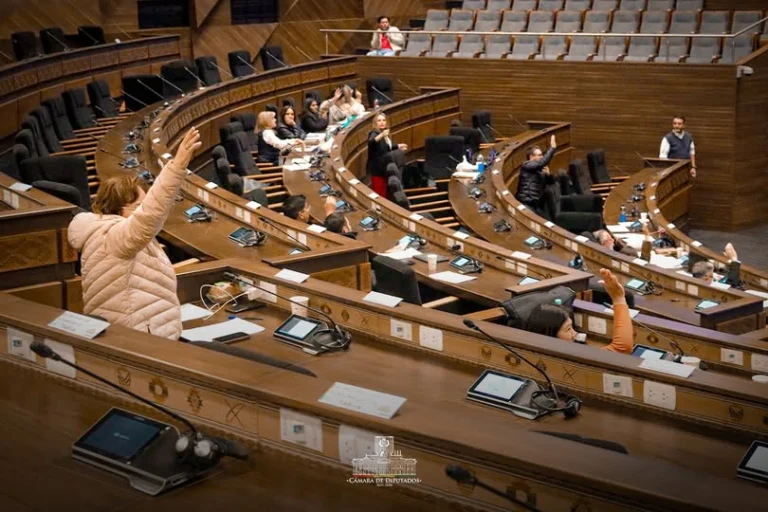
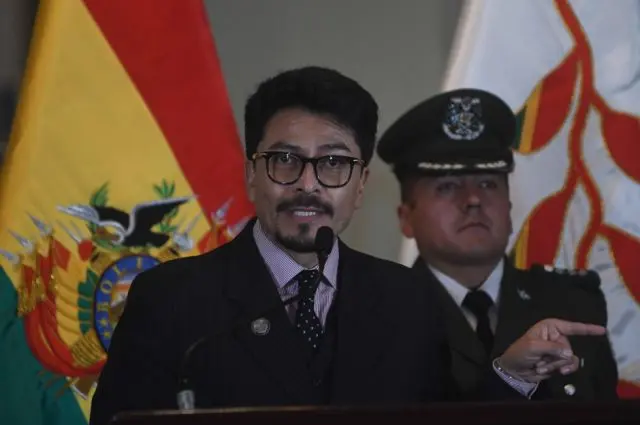
Bolivia’s Chamber of Deputies approved legislation establishing procedures and limits for States of Exception amid ongoing political tensions and protest blockades. Photo: Chamber of Deputies of the Plurinational State of Bolivia.
June 7, 2026 Hour: 7:04 am
🔗 Comparte este artículo
New legislation sets rules for emergency powers amid prolonged nationwide protests.
Bolivia’s Chamber of Deputies approved early Sunday a bill regulating States of Exception, establishing the procedures, limits, and legal framework for the use of extraordinary measures during periods of crisis.
RELATED: Bolivia Considers Emergency Rule as Protests Intensify
The 161/2025-2026 bill was approved with 86 votes in favor after 37 days of blockades organized by the Central Obrera Boliviana (COB). Promoted by the government of President Rodrigo de Paz, the legislation develops Article 139 of the Constitution and defines the circumstances under which a State of Exception may be declared.
According to the approved text, such measures may be enacted in cases involving threats to state security, external dangers, internal unrest, or natural disasters.
Text Reads: After nearly eight hours of session, the Chamber of Deputies approved, at 00:14 this Sunday, the bill on states of exception, in its general discussion.
One of the law’s central provisions introduces the concept of “operational insufficiency,” allowing the Armed Forces to participate when the capacity of the Bolivian National Police is deemed insufficient to address situations that threaten institutional stability. The legislation nonetheless maintains the police as the primary authority responsible for preserving public order.
At the opening of the Chamber’s 125th ordinary session, Speaker Roberto Castro Salazar requested a minute of silence.
“Given the situation the country is going through and given that this is an important plenary session, I speak on behalf of all those affected in the country, and I will request a minute of silence for everyone,” he said.
The law establishes that a State of Exception must be declared through a Supreme Decree and may remain in force for a maximum of 90 days. Any extension beyond that period would require legislative authorization.
Once the emergency measure concludes, the executive branch must submit a report detailing how the extraordinary powers were exercised.
Text Reads: 📌 Bolivia: Popular Resistance Halts Government Attempt to Clear Blockade🔴 In San Julián, military and police forces withdrew after five hours of clashes with residents defending the Santa Cruz-Trinidad highway. The Government tried to clear the road and now the Chamber of Deputies is debating a law to shield the repression.
The legislation also authorizes temporary detentions of up to eight hours for individuals who fail to comply with regulations imposed during a State of Exception, after which they must be brought before the corresponding authorities.
Another key provision requires the state to provide legal representation for police officers, military personnel, and public servants facing judicial proceedings related to actions taken during a State of Exception. The law explicitly excludes such protection in cases involving torture, enforced disappearance, extrajudicial executions, or sexual violence.
The vote took place amid heightened political tensions and competing accusations between government and opposition sectors regarding the scope of state powers to restore circulation and ensure the supply of goods in a country affected by protests demanding the president’s resignation.
Following its approval and the start of detailed legislative review, the bill could serve as the framework for future declarations of States of Exception in Bolivia.
Author: MK
Source: Agencies